Workshops and conferences are where unfinished research is tested in public. The goal is not to display cleverness; it is to help the room understand what the paper claims, what the evidence supports, and what would make the work better.
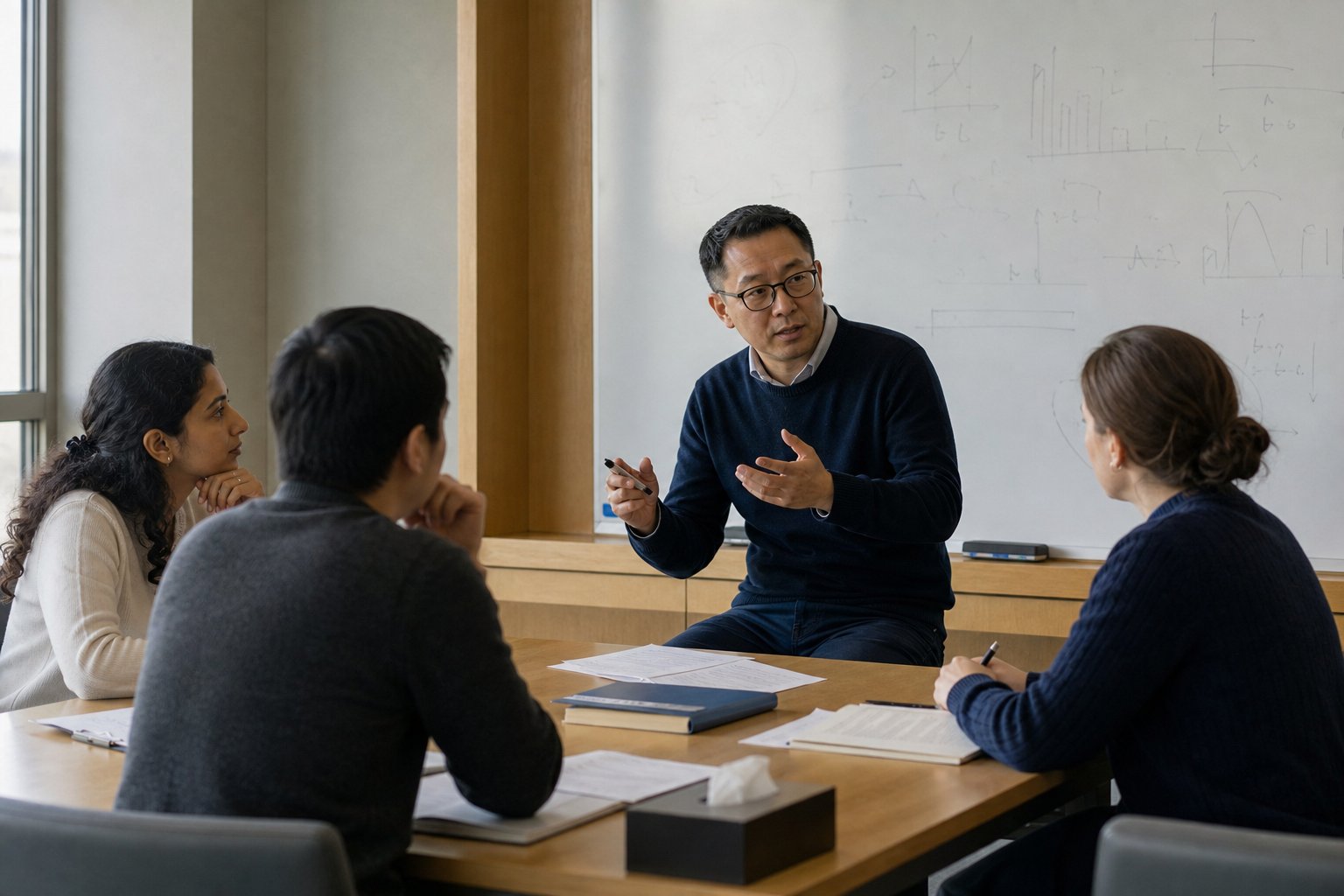
Ask questions that move the discussion
Before speaking, identify the purpose of the question. Are you clarifying the claim, testing a design choice, proposing an alternative explanation, connecting a literature, or exploring the boundary of the result? State the issue briefly enough that the presenter and audience can hold it in mind.
- Ask one question at a time.
- Distinguish a clarification from a criticism.
- Explain why the issue matters for the conclusion.
- Listen to the answer and let the discussion move on.
- Save detailed suggestions for a private note when they do not benefit the room.
Presenting your own work
State the question and contribution early, then spend time where the audience most needs help: the institutional setting, mechanism, design, or interpretation. Know which details can move to backup material.
During questions, listen fully, answer the concern rather than one familiar keyword, and acknowledge a real limitation. A workshop is successful when the audience understands the paper and you leave knowing how to improve it—not when every question disappears.
Serving as a discussant
A discussant should make the paper and the conversation better. Begin with an accurate account of the question and contribution so the audience can see the paper through a second lens. Then develop the few issues that most affect contribution or credibility.
Offer a path forward when possible. Avoid redesigning the paper around your own preferred question, spending most of the time on minor errors, or surprising the authors with a fundamentally different presentation than the comments you shared.
Moderating a session
Use the organizer's current timing and instructions. Arrive early, confirm names and pronunciations, test the equipment, agree on time signals, and protect the discussion period. Intervene when one exchange consumes the session or when a question becomes personal.
Choose meetings deliberately
A meeting can provide feedback, literature knowledge, collaborators, visibility, or access to a specialized community. Decide which return you need before spending travel money and time. A focused section meeting may be more useful than a large conference if the right readers are there.
Conference names, dates, formats, and submission rules change. Use the organizer's own page for the current cycle. The AAA meetings directory is a starting point for accounting events.
Build professional relationships naturally
Read people's work, ask specific questions, introduce others, and follow up when you promised. Do not measure a conference by how many contacts you collected. A small number of real intellectual conversations is more valuable than a room of hurried introductions.
Before committing to travel
Ask what your program or employer will reimburse, what approval is required, and whether funding depends on presenting. Use live event and institutional pages for fees and policies; see Funding and stipends for the broader role of research support in a doctoral offer.